
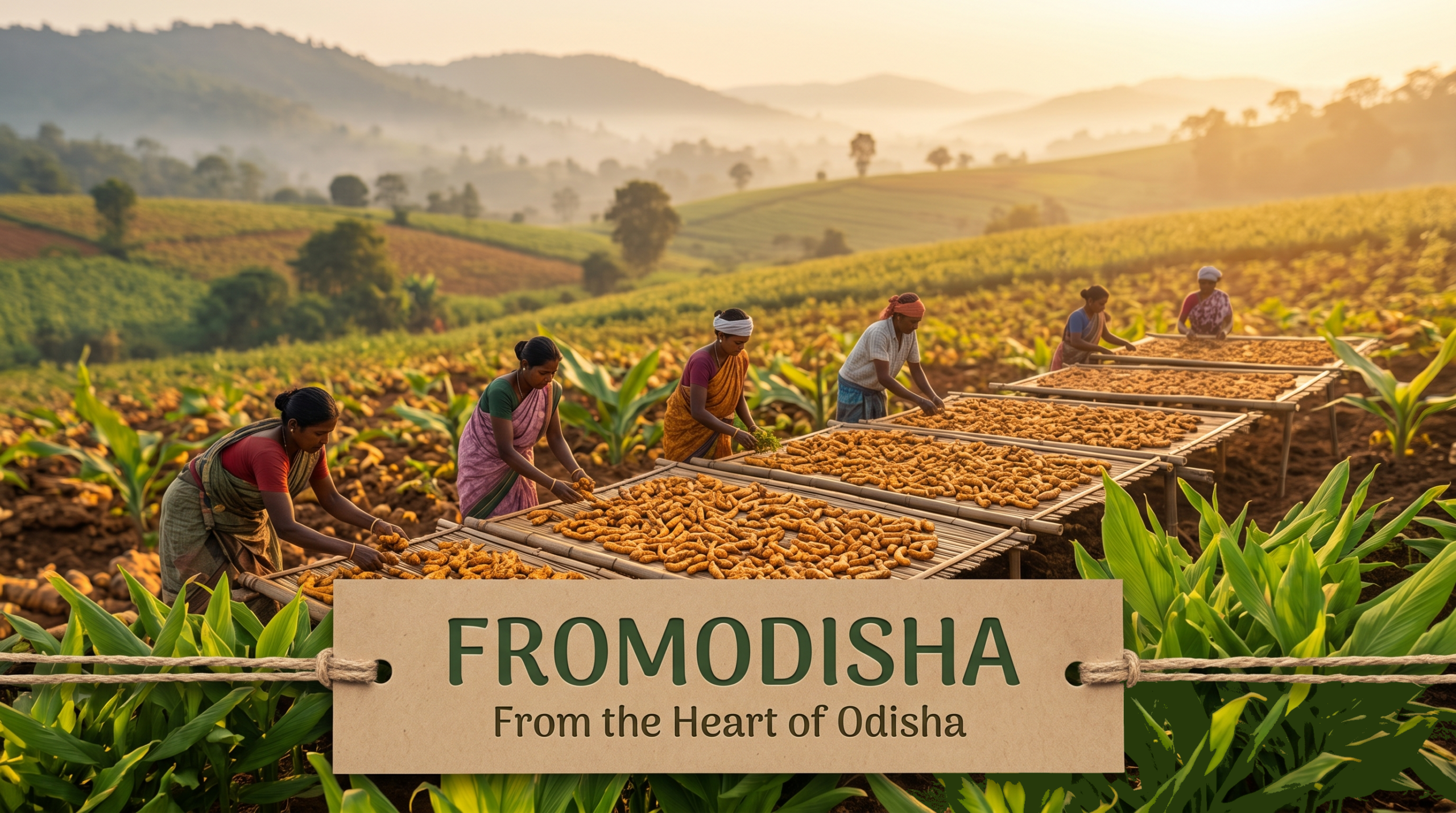
Before Kandhamal Haladi reaches a kitchen shelf, it passes through a chain of seasonal work: a rhizome is planted, the crop is harvested, and the turmeric is cured, dried, cleaned, and prepared for use.
That journey matters because a regional food is never only an ingredient. It carries the name of a place, the work of cultivation, and the knowledge needed to turn a fresh crop into something that can be stored and shared.
Where this story begins
Kandhamal Haladi is the turmeric associated with Kandhamal district in Odisha. The Geographical Indications Registry records it as a registered agricultural Geographical Indication under application number 610.
The GI record identifies Kandhamal Apex Spices Association for Marketing as the applicant and records Odisha as the geographical area. A GI registration gives the product a recognised regional identity; it does not, by itself, replace the need for clear origin information and responsible sourcing.
You can read our earlier introduction to the story and identity of Kandhamal Haladi or learn how we think about GI tags and traceability.
From rhizome to harvest
Turmeric grows underground as a rhizome. What we call turmeric in the kitchen begins as a living plant in the field, with the crop passing through a growing season before the rhizomes are lifted and collected.
The field stage is only one part of the story. Once harvested, the fresh rhizomes need to be handled properly so that they can become a stable ingredient rather than remain a short-lived seasonal crop.
What curing does
Fresh turmeric is commonly cured before it is stored or sold as dried turmeric. In broad terms, curing involves cooking or boiling the fresh rhizomes and then drying them. The process reduces moisture and prepares the turmeric for longer storage.
The Spices Board of India describes turmeric processing as cooking, drying, and polishing. It also notes that cured turmeric is sun-dried on clean, suitable surfaces and turned during drying so that it dries more evenly.
These steps may sound simple, but they require attention to time, cleanliness, weather, and handling. Processing is part of the product’s quality—not an invisible step after cultivation.
Drying, cleaning, and preparation
After curing and drying, turmeric may be cleaned and polished. It can be sold as dried rhizomes or ground into powder, depending on how it will be used.
Whole turmeric and turmeric powder are not identical forms. Whole rhizomes allow people to see the product before grinding, while powder is convenient for everyday cooking. In either case, the most useful information for a buyer is clear information about origin, handling, packaging, and the seller.
How Kandhamal Haladi enters everyday food
In the kitchen, turmeric contributes colour, aroma, and an earthy bitterness. It can be used in dals, vegetable preparations, pickles, spice blends, and many other home-cooked foods.
The quantity and form used will vary from kitchen to kitchen. Some people use a small amount of powder while cooking; others keep dried turmeric as part of a wider pantry of whole spices. The ingredient becomes meaningful through repeated, ordinary use—not only through a product label.
A GI name and a real supply chain
A Geographical Indication connects a product with a defined place and recognised identity. For Kandhamal Haladi, the registration helps distinguish the name from a generic reference to turmeric.
But a GI name should be accompanied by transparency. When buying a regional product, look for the origin, seller details, product form, packaging information, and any available traceability details. If the information is unclear, ask questions before buying.
This is especially important when a product is presented as coming from a particular district. Respect for a place includes respect for the people who cultivate, process, sell, and carry its products forward.
One ingredient, many stories
Kandhamal Haladi is one part of Kandhamal’s wider story. A district is not defined by one product alone. Its identity can include agriculture, forests, foodways, communities, crafts, landscapes, and changing livelihoods.
Explore more stories from the Kandhamal region as we build a district-by-district record of Odisha’s living heritage.
Frequently Asked Questions
What is Kandhamal Haladi?
Kandhamal Haladi is turmeric associated with Kandhamal in Odisha and is recorded as a registered agricultural Geographical Indication by the Geographical Indications Registry.
How does fresh turmeric become dried turmeric?
Turmeric is generally cured, dried, cleaned, and sometimes polished before it is sold as dried rhizomes or ground into powder. Processing methods can vary by producer.
What should I check when buying Kandhamal Haladi?
Look for clear information about origin, seller details, product form, packaging, and available traceability information. A regional name should be supported by transparent sourcing.
Kandhamal Haladi’s journey from field to kitchen reminds us that food heritage is made of connected steps. A familiar pinch of turmeric can hold a place, a season, a process, and the continuing work of people who make regional products part of everyday life.
Sources: Geographical Indications Registry of India and the Spices Board of India guidance on turmeric processing.